
COM-A
New construction electrical
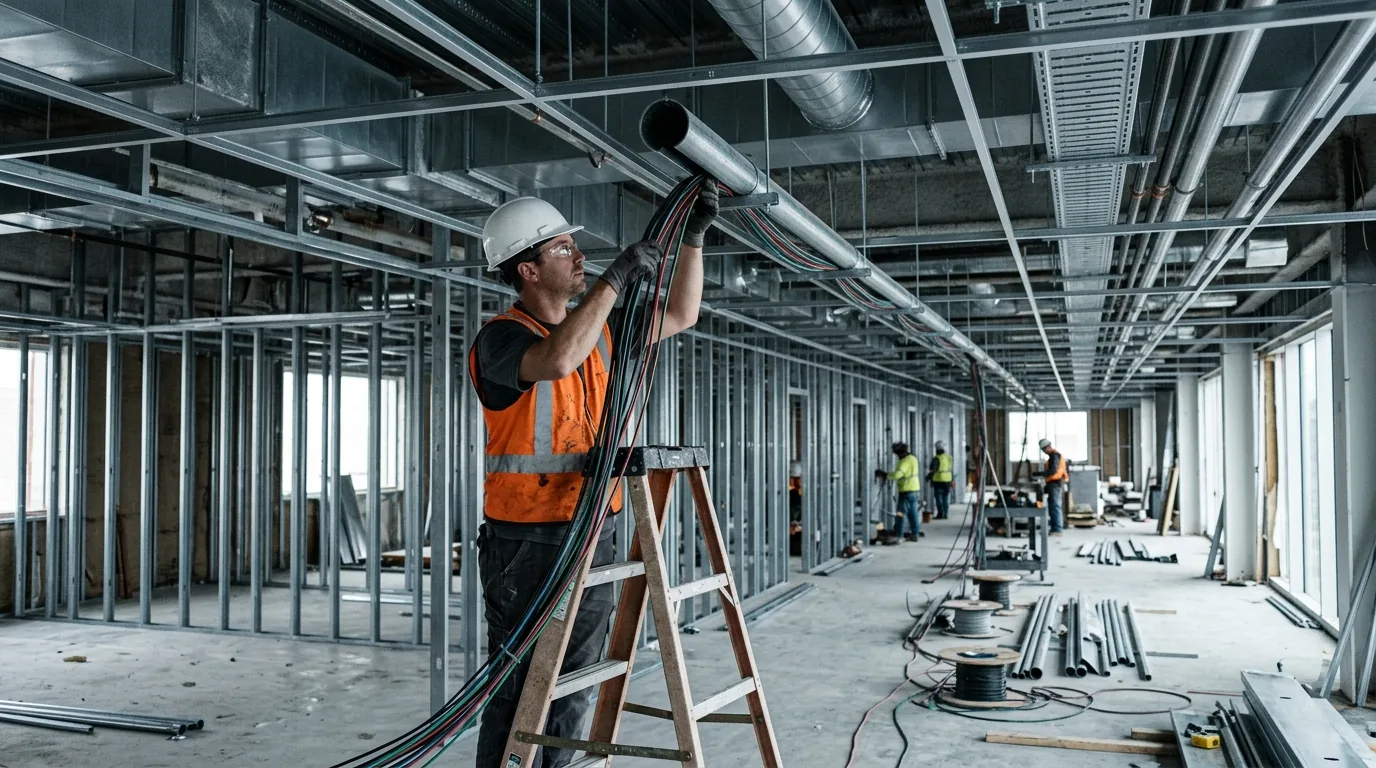
Underground, rough-in and trim on commercial builds and tenant work. Conduit, branch circuits, panels and devices, sequenced against the general contractor's programme.
New constructionCOM-00 Commercial electrical
New construction, refurbishment and the selective removal work that comes with changing a building's use. We handle the commercial electrical scopes that general contractors and property teams need done on a schedule that was set months ago.
COM-01 What we take on
Every job on our board is commercial or industrial. That is a deliberate limit, and it is worth saying plainly because a lot of contractors who advertise commercial electrical work are running residential crews between jobs.
The difference shows up in the parts of the job nobody photographs. Coordination with other trades, working to a general contractor's schedule, inspections, submittals, and the discipline of leaving a building documented well enough that the next crew can work on it.
A building being repurposed almost always needs electrical taken out before anything new goes in. Handling both halves with one crew removes the argument about what was supposed to stay energised.
Emergency services are available 24 hours a day, seven days a week. Some commercial electrical problems will not wait for a scheduled visit. Call the number rather than sending a form, describe the failure and the site, and we will tell you honestly whether we can get a crew there and when.
COM-02 Commercial scopes
New construction is the bulk of it. The rest is upgrade, reconfiguration and removal in buildings that are already standing.
COM-A
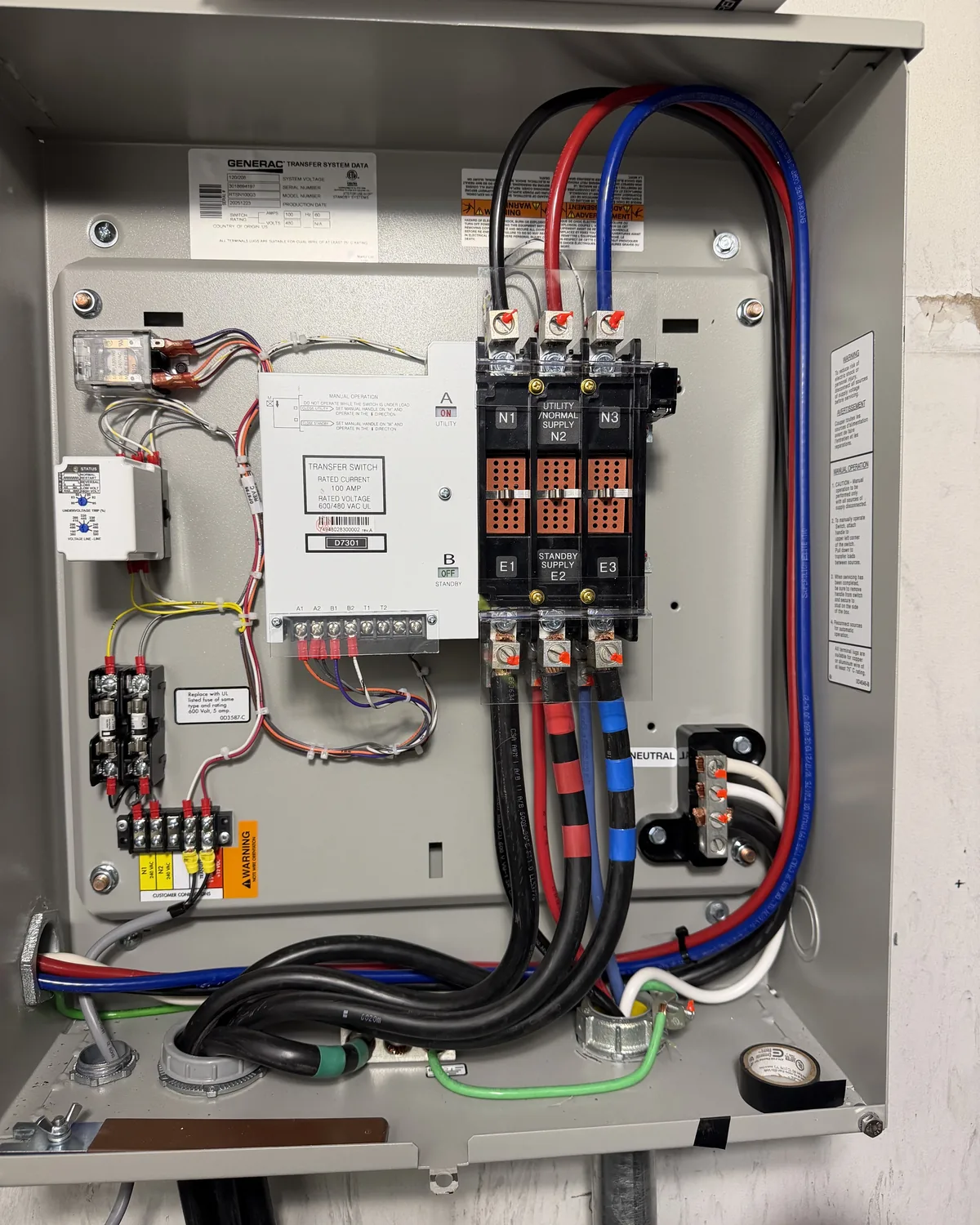
Underground, rough-in and trim on commercial builds and tenant work. Conduit, branch circuits, panels and devices, sequenced against the general contractor's programme.
New constructionDEM-01
Taking out exactly what is leaving. Abandoned circuits, redundant gear and dead conduit removed while everything still in service stays live.
Selective demolitionCOM-03 Working with general contractors
From drawings and a site walk, per project. There is no published rate card, because a rate card either overcharges the simple jobs or underprices the hard ones, and both of those end badly.
Site walks generally run thirty minutes to two hours depending on the size of the project. Payment is by card, online payment or check.
Send the drawings and the programme dates. You will get a written scope and a number against them.