
IND-00
Industrial electrical
Plant work, where removal usually precedes a new line or a new tool.
Industrial overviewDEM-00 Selective electrical demolition
Taking out precisely what is leaving, while everything still in service stays energised and untouched. It is the opposite of demolition as most people picture it, and it is one of the things this crew does best.
DEM-01 What selective means
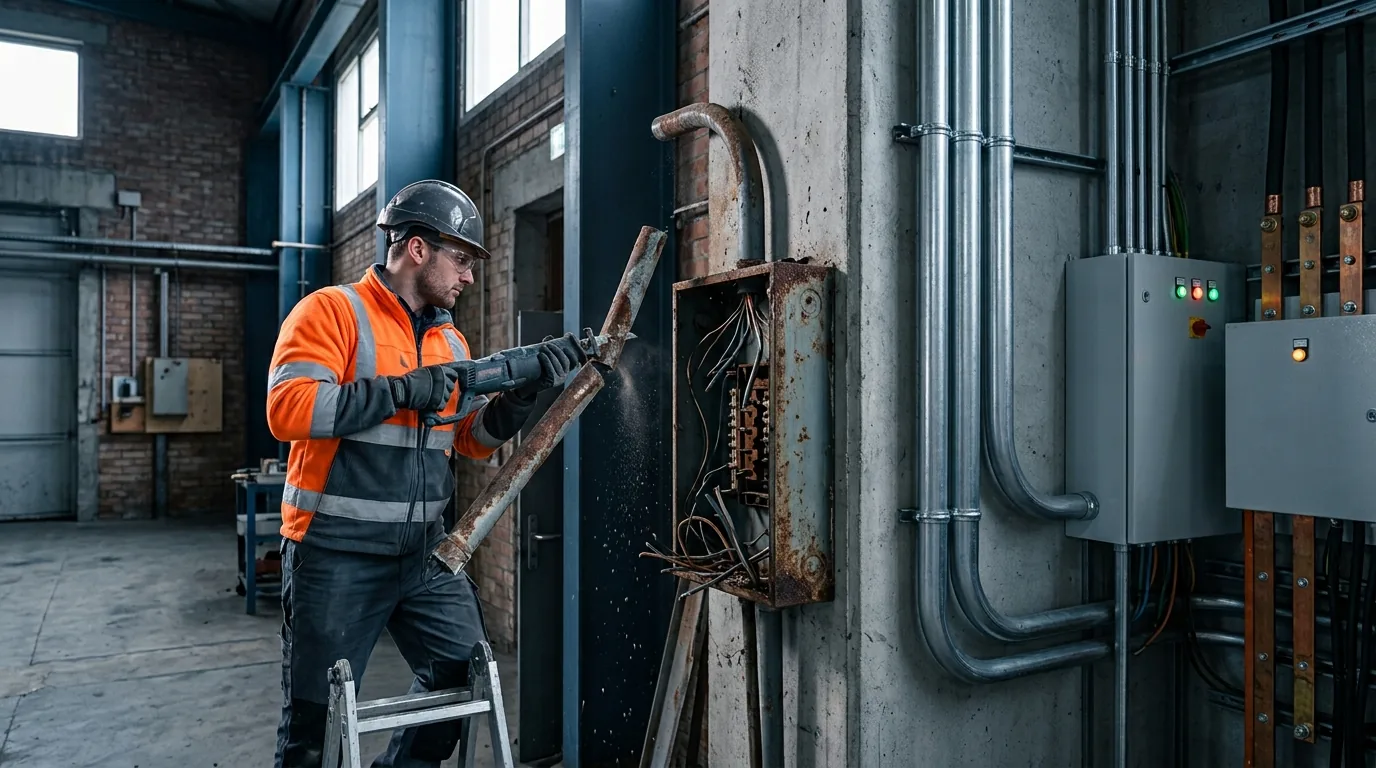
Selective demolition is removal inside a building that is still operating. A line is coming out, a tenant has left, a bay is being repurposed, or thirty years of abandoned circuits have accumulated behind a wall. Something has to go, and a great deal around it has to stay exactly as it is.
The risk is never the cutting. It is the tracing. A conduit that looks dead because nothing it feeds is running may be the only path to something that matters two rooms away. We identify and verify before anything is cut, and we cut only what has been proven dead.
Production lines get replaced, and the electrical that fed them becomes clutter that the next installation has to work around. Removing it properly is what makes the floor usable again rather than a maze of abandoned conduit.
Tenant changes and refurbishments leave behind circuits, gear and devices belonging to a layout nobody uses. Clearing it before the new installation begins is cheaper than routing around it forever.
When one contractor removes and another installs, the argument about what was supposed to survive happens after something has already been cut. Running the removal and the new work with one crew removes that handover entirely.
DEM-02 Method
The sequence never changes, and no step gets skipped because the answer seems obvious.
Anything discovered mid-job that contradicts the drawings stops the work on that circuit until it is understood. That occasionally costs an hour. Not doing it has cost other people considerably more.
Walked against the drawings with your team, marked on site, and agreed before mobilisation.
Traced and tested. A circuit is not abandoned because somebody remembers it being abandoned.
De-energised at the source, locked, tagged and proven dead at the point of work.
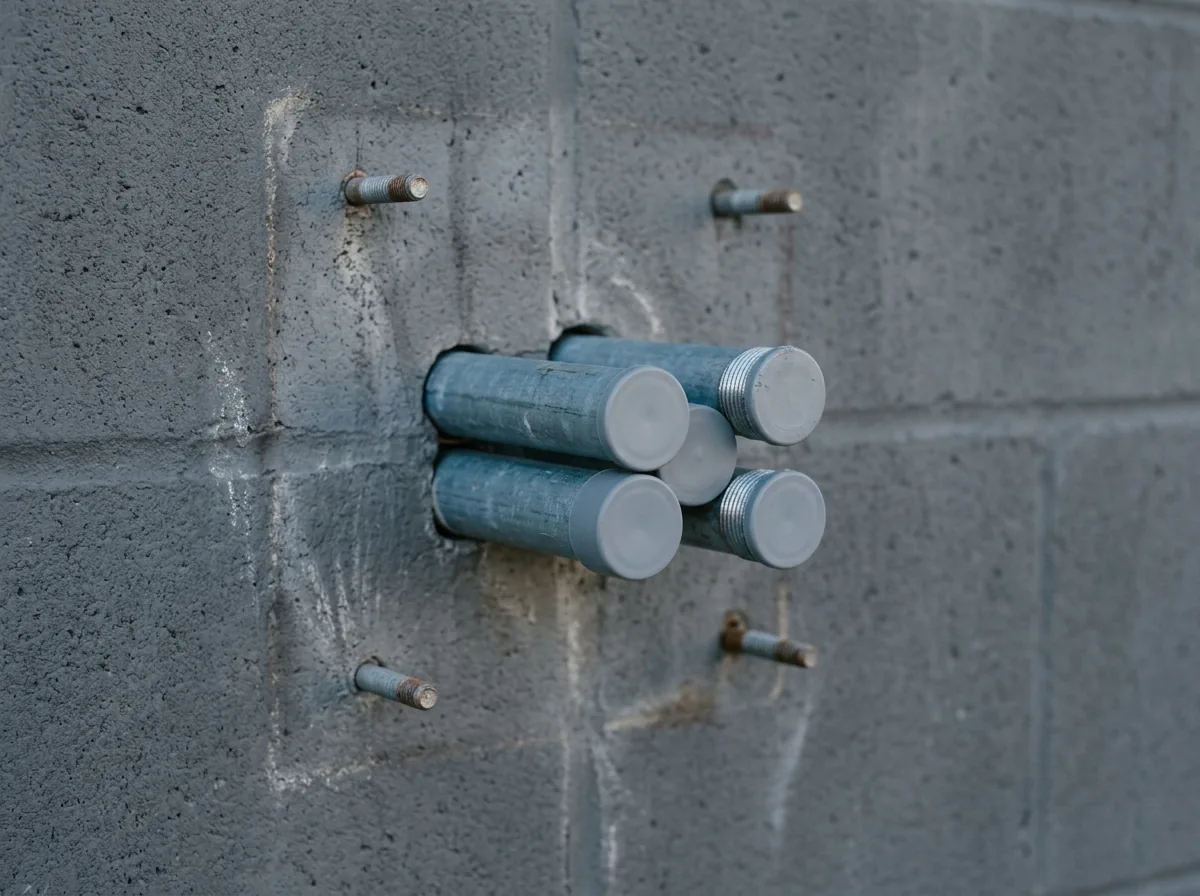
Gear and conduit taken out, remaining stubs capped, panel schedules corrected to match.
DEM-03 What follows
Whatever is being removed is normally making room for something.
IND-00
Plant work, where removal usually precedes a new line or a new tool.
Industrial overviewCOM-00
Tenant and refurbishment work, where removal precedes the new installation.
Commercial overviewIND-C
Old distribution coming out as new capacity goes in, staged around the cutover.
Facility upgradesSend the drawings, or photos of what you are looking at. We will scope the removal and tell you what has to be verified first.